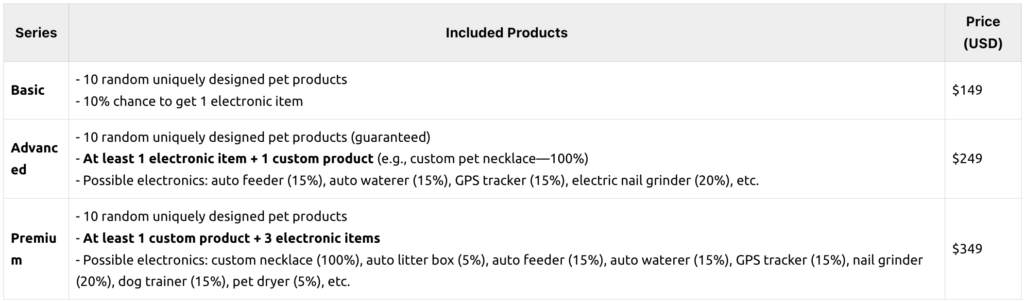
Bad bags cost more than money. I learned that after a shipment of wrong rolls ruined a shelf display and a month of sales.
Buy dog poop bags wholesale from China by sourcing verified suppliers on Alibaba, Made-in-China, Global Sources, or directly from packaging and bio-plastic factories, then compare materials such as PE, recycled PCR, EPI-additive biodegradable, or compostable PLA/PBAT/cornstarch blends. Before bulk ordering, confirm ASTM D6400 or EN 13432 proof for compostable claims, bag thickness, size, scent, roll count, OEM packaging, MOQ, FOB/CIF shipping cost, and test samples for leak resistance, tear strength, and easy opening.
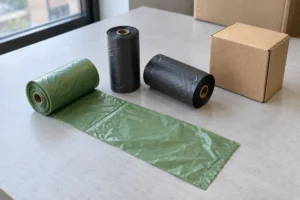
Don't stop at price. The right spec and packing save freight and returns. Read the checks I use before every purchase.
What types of dog poop bags should retailers buy in bulk?
Are you sure you stock the right mix? I once saw a store sell out of refill rolls and still have heavy duty packs no one wanted.
Retailers should buy a mix of retail-ready tie-handle packs, certified bio-based or compostable rolls and boxes, universal-fit commercial roll refills, and header bags with pull-strap systems. Use tie-handle packs for pet-store shelves, compostable rolls for eco-conscious buyers, and heavy-duty commercial refills or header bags for property managers, parks, HOAs, and high-traffic waste stations.
Buy a focused range. Start with unscented refill rolls. Add a dispenser-and-refill set. Offer one larger value pack. Add tie-handle bags if the market likes them. Offer certified compostable or recycled-plastic options if your customers want green choices. Use recycled-content bags for a mid-tier position. Use compostable bags only when you can verify local disposal options and valid certificates. Keep pack sizes simple: refill rolls (small), retail pouches (medium), and bulk value packs (large). This reduces SKU clutter and helps buyers choose fast.
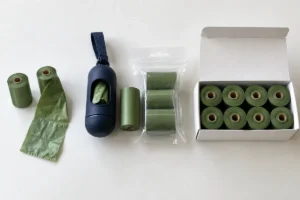
I build ranges to match repeat purchases. Refill rolls sell often. They fit dispensers. They keep customers coming back. Dispenser-and-refill sets lift the perceived value. Large value packs suit big dog owners and distributors. Tie-handle or knot-tie bags are easier to carry and sell well in retail. Certified compostable bags work in markets with good composting facilities. Recycled-plastic bags help you claim sustainability without composting claims. When I advise clients, I always ask where they will sell. On Amazon, small refill rolls and dispenser bundles do best. In independent pet shops, tie-handle and value packs can work. For supermarkets, clear price points and recognizable eco-certs sell better. I also test one green SKU first. If it sells, I expand. I avoid too many custom colors or pack sizes at first. Custom colors can lock you into high MOQ by weight. I prefer a tight, tested range that moves fast and keeps shipping simple.
How do you compare wholesale dog poop bag prices and quality?
Do you compare by roll price only? I learned the hard way that roll price lies if the roll count is different.
Compare price per 1,000 bags. That reveals real cost. Match bag size, material, thickness, bottom seal, and printing. Ask suppliers what their MOQ means: bags, rolls, retail packs, or kilograms. Always check the roll diameter and core size. Test a sample roll in your dispenser before you buy. Check perforation, ease of tear, film consistency, odor, and whether printing transfers. Verify the approved load and leakage method in writing. Count bags in a sample and re-weigh a pack to confirm. If the supplier quotes by kilogram, convert to bag count to compare apples to apples.
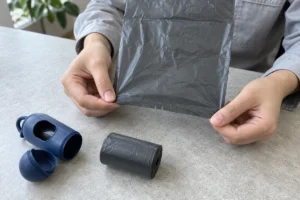
I use a small formula and a few physical tests. First, price math. If a roll of 15 bags costs $0.12, that is $8 per 1,000 bags. If another roll of 10 bags costs $0.10, that is $10 per 1,000 bags. The first is cheaper per bag. Always divide the roll price by count and scale to 1,000. Second, specification match. I list bag width, height, and gusset. I note material type (HDPE, LDPE, or compostable polymer) and gauge (microns or grams per square meter). I also note bottom-seal style—heat seal or overlap—and test samples for leakage. Third, dispenser test. I put the sample roll into the actual dispenser. A correct width and core size do not always mean it will feed cleanly. I tear several consecutive bags. I watch for partial tears that ruin the next bag or open the bottom seam. Fourth, certificate verification. For recycled claims, ask for documentation that shows post-consumer recycled content and the cert holder. For compostable claims, check the certificate body, the covered product, and logo permissions. For US sales, compare packaging text with FTC Green Guides. Finally, MOQ clarity. Some makers set MOQ by weight. For example, a 500 kg custom MOQ equals about 250,000 bags at 2 g per bag. This math tells you how many packs that really represents. I always ask for a clear MOQ breakdown: bags per roll, rolls per retail pack, packs per carton, and kg per batch. This prevents surprises.
How can you order private label dog poop bags from China with a manageable MOQ?
Do you need printed bags on day one? I suggest a staged approach to reduce risk and MOQ pain.
Start private label with packaging and branding, not bag printing. Use branded sleeves, hang cards, stickers, or printed retail boxes. Keep the bag film standard at first. Limit custom printed bags to simple runs after you confirm sales. Confirm barcode placement, pack counts, carton quantities, gross weight, and CBM before production. Calculate freight and warehouse cost. For compostable bags, ask for written shelf-life and storage conditions. If a supplier quotes custom bag MOQ by weight, convert that to bag counts so you know the real commitment. Use a mixed $3,000 initial order that bundles several proven pack sizes. This lowers SKU risk and spreads MOQ across items.
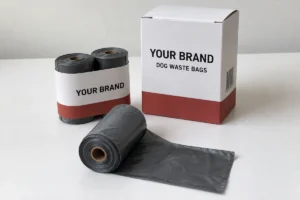
I use a four-step private-label path. Step one: soft branding. I add a woven or printed sticker, a branded sleeve, and a printed corrugate box. These changes often have low setup costs and low MOQ. I ask the factory for artwork templates, barcode position, and sample mockups. Step two: validate the specs. I approve a finished roll sample and test it in my own dispenser. I sign off on tear, perforation, bottom seal, and odor. I also check the printed sleeve or box mockups. Step three: plan MOQ with conversion math. If the factory requires 500 kg for custom color or print, I convert the kg to bag count. I then split the total MOQ across SKUs or share production with partners if allowed. I also check carton CBM so I know whether freight or storage will grow costs. Step four: test and scale. I recommend a mixed initial order around $3,000. This usually covers multiple pack sizes and a dispenser bundle. After 60–90 days of sales data, I choose which packs to print on the bag film. If sales are strong, I negotiate lower prices and amortize any printing setup. I also verify eco-claims and shelf life for compostable lines before any packaging that mentions composting. This step protects the brand and avoids misleading marketing.
Conclusion
Focus on price per 1,000, test dispenser fit and tear, verify eco claims, and start private label with packaging first.
I am Jerry at Petmmbear. We are a full-category pet supply factory in China. We handle refills, dispensers, bags, and mixed orders. We plan mixed wholesale starting around USD 3,000. Our factory helps buyers check MOQ, CBM, certificates, and dispenser fit. Our customer satisfaction rate is about 97%. Contact me via the inquiry form at www.petmmbear.com or email [email protected].